BBQ’d Pork: Is It Smoky in Here? ……Then Let Some Air into the Room.
Just as there are great burgers and bad ones, not all indoor pulled pork is created equal. My goal with this recipe was to come up with a technique to produce pulled pork that shreds into large, tender chunks that are moist but not wet, with a flavor that balances sweet molasses, bright vinegar, heat, and just a hint of smoke. Oh, and I wanted it to be darn easy to boot.
Homemade barbecue sauce has way better flavor than bottled versions.
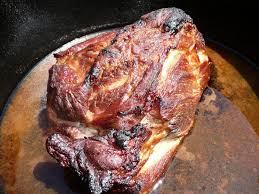
Cooking the pork shoulder in the Dutch oven allows the meat to slowly grow tender, while developing a bark-like crust on top.
Adding only half of the barbecue sauce at the beginning keeps the pork from coming out too wet.
Use a high-quality liquid smoke, with no ingredients other than water and smoke. Avoid brands with molasses or vinegar, as these can affect flavor. For a stronger smoke flavor, combine 2 tablespoons liquid smoke and 3/4 cup kosher salt (7 1/2 ounces) with 1 gallon cold water. Submerge pork and let rest in the refrigerator for at least 1 hour and up to 8 hours.
By far, the best smoked pork is to go low and slow with best and fresh ingredients traditionally prepared in barbecue smokers with a great deal of thought going into the type of wood(s) used to infuse into these larger cuts of pork. However, the low and slow method of BBQ requires time to fully develop the moist, delicate, full bodied flavor.
With our busy lifestyles, time sometimes is at a premium and the love and dedication to this special art form requires patience. Weather and seasons also can deter us from enjoying the full experience of outdoor cooking.
The alternative to outside smoking low and slow, is to go indoors and use the dutch oven. Indoor pulled pork has always been somewhat disappointing. How could it ever compare to the tender and moist—but never wet—texture of real barbecue with a dark crust, a rich and smoky flavor, and a lovingly crafted sauce?
Easy: It can’t compare, and it shouldn’t compare. Just as it’s perfectly possible to love both grilled steaks and pan-seared steaks, or grilled burgers and burgers smashed on a griddle, it’s okay to enjoy pork shoulder cooked both outdoors and in-. The two dishes are similar but completely different foods that can both be appreciated on their own merits.
But, just as there are great burgers and poor, not all indoor pulled pork is created equal. The goal with this recipe was to come up with a technique to produce pulled pork that shreds into large, tender chunks that are moist but not wet, with a flavor that balances sweet molasses, bright vinegar, heat, and just a hint of smoke. Easy too.
Going Dutch
Most simple pulled pork recipes involve dumping a pork shoulder into a slow cooker, adding some bottled barbecue sauce and stock, and letting it cook until the pork falls apart. There were two simple and obvious upgrades that could be made to this method.
First was to ditch the slow cooker and use a Dutch oven placed in the oven instead. A slow cooker heats only from the bottom and, subsequently, cooks only through simmering and steaming. A Dutch oven placed in the oven, on the other hand, heats from all sides, allowing browning to occur on the surface of the stew and around the edges of the pot, leading to far superior flavor. I’ll trade the convenience of countertop cooking for more flavor any day.
The second step was to ditch the bottled barbecue sauce and instead mix up a quick sauce: dark molasses, ketchup, Worcestershire sauce, mustard, cider vinegar, hot sauce, and a spice blend consisting of black pepper, cayenne pepper, coriander, cumin, paprika, brown sugar, and salt. Since your mixing up a spice blend for the barbecue sauce, I’d let the same blend perform double duty as a dry rub for my pork shoulder.
The browning around the edges of the Dutch oven was better than nothing, but giving the shoulder a sear at the start of cooking boosted flavor even more. (It goes fast because of the extra sugar in the spice rub.) also sautéed onion in the browned bits left behind by the pork. The next issue was sauce quantity.
Some recipes call for as much as a full quart of liquid in the pot, perhaps based on the idea that more moisture to start will lead to moister pork in the end. But, for a crisp-skinned slow-roasted pork shoulder proves, it’s perfectly possible to get supremely moist pork even with no added liquid at all. Adding excess sauce during cooking is the prime culprit in the wet-pork issue. We’re after pulled pork here, not ragù.
The other interesting factor to note was that no matter how bright and flavorful the sauce was to begin with, it would lose that brightness over the course of cooking. Sure, it picked up some great pork flavor, but the tanginess was gone. Turns out you can fix both of these problems with one simple solution: Don’t add the sauce all at once.
By starting with only half the sauce, along with a small amount of chicken stock, and then adding the remaining half after shredding the pork, I ended up with pork that had better texture and sauce that had brighter flavor. A small splash of good-quality liquid smoke simulates that true smoked flavor.
By the way, just as it’s possible to overcook beef in a beef stew, it’s quite possible to overcook pulled pork. You want your pork to be pull-apart tender—an indication that the connective tissue binding muscle fibrils together has broken down—but not so cooked that the muscle fibrils themselves start to lose structure and turn to mush.
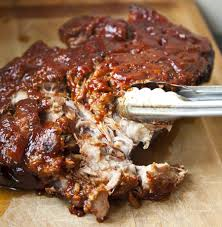
As soon as the pork pulls apart in easy chunks, you’re done.
The moistness of the pork and the flavor of the sauce comes out, but there was still a little something lacking: texture. Whether indoors or out, pulled pork should have a combination of moist meat and crunchy bark.
This was another easy fix: Orienting the pork fat (or skin) side up and taking the lid off of the Dutch oven for the last hour of cooking allowed the exposed surface of the pork to brown and crisp into a dark bark.
Subsequently shredding that pork and mixing the bark in with it improves the texture.
At this stage, you could take this pork in any direction you like. Mix it with a vinegary, Eastern North Carolina–style barbecue sauce. Shred it and stuff it into tacos with salsa. Maybe go with a mustard-style sauce.
This recipe is a Kansas City–style sauce.
After skimming the excess fat off the surface of the liquid in the Dutch oven and adding the rest of the barbecue sauce to the pot, fold in the pork, adding a little more vinegar to help brighten up the richness of the meat and stirring it around to try to get some of the great flavor in the browned juices around the side of the pot.
At first, it tastes as it should: moist pork, flavored with a tangy barbecue sauce. After it rests in the sauce and gets reheated in the days that follow, it more closely resembles that wet, ragù-style pulled pork used to seeing in slow cookers. The flavor is there, but the texture starts to suffer.
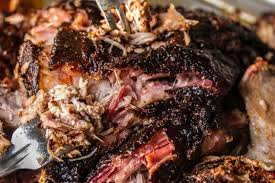
As a suggestion, keep the sauce and the pulled pork separate, dressing only what you’ll eat in one go.
The Sauce is the bomb!
Ingredients:
1 tablespoon kosher salt
5 tablespoons dark brown sugar
Large pinch cayenne pepper
1 teaspoon ground coriander
1/2 teaspoon ground fennel seed
1 tablespoon paprika
1 teaspoon ground cumin
1 teaspoon freshly ground black pepper
1 whole bone-in or boneless pork butt (5 to 7 pounds)
1 cup ketchup (8 ounces)
1/2 cup dark molasses (4 ounces)
2 tablespoons Worcestershire sauce
1 tablespoon high-quality liquid smoke
1 tablespoon brown sugar
2 teaspoons hot sauce
1/2 cup cider vinegar, divided
1 tablespoon vegetable oil
1 large onion, finely minced (about 6 ounces)
1 cup bourbon *Optional
1/2 cup low-sodium chicken stock or water
Directions
1.) Adjust oven rack to lower position and preheat oven to 300°F (150°C). Combine salt, sugar, cayenne pepper, coriander, fennel seed, paprika, cumin, and black pepper in a small bowl and mix until homogeneous. Season pork with 2 to 3 tablespoons spice mixture, making sure to rub it on all sides. Reserve remaining spice mixture.
2.) Whisk together ketchup, molasses, Worcestershire sauce, liquid smoke, mustard, hot sauce, and half of cider vinegar in a medium bowl. Whisk in remaining spice mixture. Set aside.
3.) Heat oil in a Dutch oven over medium-high heat until shimmering. Add pork and cook, turning occasionally, until well browned on all sides, about 5 minutes total. (Pork will brown fast because of the sugar. Do not let it burn.) Add onion and cook, stirring and scraping up browned bits from the bottom of the pan, until softened, about 2 minutes.
4.) Turn off burner and add bourbon. Relight burner. Carefully ignite the bourbon with a long match or lighter. (Stand back and make sure there is nothing flammable above it; it will produce tall flames.) Let cook until flames die out, about 2 minutes.
5.) Add half of sauce mixture and chicken stock or water. Cover Dutch oven, transfer to oven, and cook until pork is just starting to turn tender, about 4 hours. Remove lid and continue cooking until a knife or fork shows very little resistance when twisted inside the meat and a dark bark has formed, about 1 hour longer.
6.) Transfer pork to a large bowl, reserving liquid in pot. Using a ladle, skim off excess fat and discard. Add reserved sauce and remaining vinegar to pot and whisk to combine. When pork is cool enough to handle, shred with two forks.
7.) Transfer shredded pork to pot and toss with sauce. (If making ahead to serve over the course of several meals, store pork and sauce separately, adding sauce only to the portion you are serving immediately.) Season to taste with more salt, sugar, liquid smoke, or cider vinegar.
8.) Serve and enjoy!

Categories: Chef's Corner - Newsletter
 Fresh Inspirations
Leave a comment